Living in Singapore means your air conditioning is running almost continuously. Over time, humid tropical air, airborne dust, and pet dander turn your cooling unit into a breeding ground for mould, jelly-like biofilm, and efficiency-killing grime. If left unchecked, these contaminants can trigger serious, hidden indoor air quality issues caused by neglected cooling units, aggravating allergies and respiratory irritation.
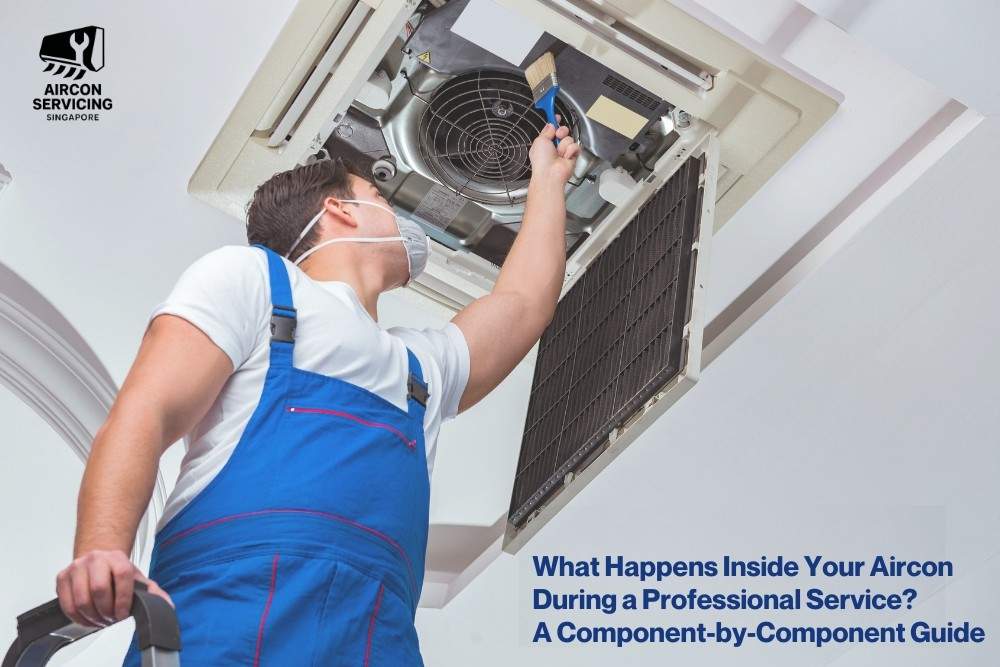
When you book professional aircon servicing, technicians don’t simply wipe the external plastic case and rinse the front mesh. A qualified technician conducts a thorough teardown to clean, calibrate, and inspect the internal mechanical and electrical components.
Here is what happens behind the cover when you book reliable aircon servicing in Singapore.
The Component-by-Component Servicing Breakdown
1. Front Fascia and Primary Air Filters
The Problem: Fine dust, dead skin flakes, and cooking oil form a dense mat over the filters, restricting intake airflow and forcing the fan motor to work overtime.
The Process: The technician clips off the front cover and removes the primary mesh filters. Both are treated with an antibacterial wash, rinsed under pressure, and dried completely before reassembly to prevent musty smells.
2. The Evaporator Coils
The Problem: These aluminum fins absorb heat from your room. Because moisture constantly condenses on them, wet coils trap dirt deep within the fin matrix, leading to ice buildup and sour odors.
The Process: The technician uses an industrial coil cleaner or low-acid chemical solution, followed by a controlled pressurized water rinse. This dissolves embedded grease and bacterial film without bending the delicate fins.
3. The Blower Wheel (Cross-Flow Fan)
The Problem: Dust collects unevenly on the curved edges of the cylindrical fan drum. This reduces air throw, generates rhythmic rattling noises, and disperses mold spores into your indoor air.
The Process: During a standard service, the wheel is brushed and vacuumed; during an overhaul, it is extracted from the housing and washed thoroughly to restore balanced rotation and airflow velocity. Keeping this component clean is essential because poor indoor airflow and closed doors place severe strain on your aircon system, leading to premature wear on the motor bearings.
4. Condensate Drainage Pan and Drainpipe
The Problem: Standing water mixed with dust creates a thick sludge known as “aircon jelly.” Once the pan or the PVC discharge line clogs, condensation overflows down your interior wall.
The Process: Technicians flush the drainage pan with antibacterial wash and run a high-pressure vacuum pump directly through the drainpipe to extract trapped sludge and blockages.
5. Electrical PCB, Capacitors, and Wiring
The Problem: Humidity, power surges, and occasional insect infiltration can short out printed circuit boards (PCBs) and degrade run capacitors.
The Process: The electrical enclosure is inspected, dust-brushed, and checked for loose terminals or swollen capacitors. Technicians verify voltage and current draw to ensure components operate within factory safety tolerances.
6. The Outdoor Condenser Unit & Refrigerant Circuit
The Problem: Situated on an HDB ledge or condo balcony, the condenser faces heat, vehicular soot, and rain. A dirty condenser coil prevents proper heat dissipation, leading to poor cooling and higher utility bills.
The Process: Technicians spray down the exterior condenser coil, check fan motor bearings, and attach pressure gauges to verify R32 or R410A refrigerant levels.
How Often Should You Service Your Aircon in Singapore?
Singapore’s high humidity accelerates bacterial growth inside cooling coils. How frequently you should schedule servicing for aircon units depends on usage intensity:
- Light Usage (Bedrooms, 4–6 hours/night): Once every 3 to 4 months.
- Heavy Usage (Living rooms, WFH setups, 8–12+ hours/day): Once every 2 to 3 months.
- Commercial Units (Offices, retail, clinics): Monthly commercial aircon servicing to comply with commercial lease terms and BCA indoor air quality standards.
Aircon Servicing Price Guide in Singapore
Knowing current market rates helps you assess whether a quote represents a cheap aircon servicing deal in Singapore or an overpriced package. Typical residential market estimates in Singapore:
| Service Type | Scope of Work | Estimated Price (SGD) | Recommended Frequency |
|---|---|---|---|
| Standard General Service | Filter wash, coil brush, blower wipe, drain flush, gas check | $30 – $50 per fancoil (discounts for 3+ units) | Every 3 months |
| Quarterly Servicing Contract | 4 scheduled general visits per year + priority breakdown response | $120 – $220 / unit / year | Annual recurring |
| Chemical Wash | On-site deep cleaning of coils and blower with chemical solution | $80 – $120 per fancoil | Once a year |
| Chemical Overhaul | Complete dismantle of indoor unit, chemical soak of all parts | $130 – $180 per fancoil | For neglected or heavily leaking units |
| Refrigerant Top-up (R32 / R410A) | Vacuum check and top-up of low gas | $50 – $120 (depends on volume needed) | As required during repair |
Tip: When evaluating an aircon servicing Singapore review, be cautious of providers advertising unrealistic rates (like $10–$15 per unit). Some providers frequently use bait-and-switch tactics, skipping drain-line vacuuming or fabricating gas leaks to charge inflated top-up fees.
Booking the Right Service for Your Home
Regular maintenance extends the lifespan of your cooling system by years while cutting monthly power bills.
If you need a routine seasonal maintenance run, look for a certified company offering a transparent aircon servicing package with documented customer reviews, clear terms, and no hidden chemical wash charges. For continuous care, a quarterly aircon servicing contract remains the most cost-effective way to prevent sudden leaks and ensure your system runs cool, quiet, and fresh year-round.