Singapore’s hot and humid climate makes air conditioners an essential part of daily life. Many households run their aircon for several hours every day, especially in bedrooms where people spend nearly one-third of their lives sleeping.
But have you ever wondered whether your air conditioner could be affecting the air you breathe?
Many homeowners notice symptoms such as frequent sneezing, itchy eyes, nasal congestion, or mild coughing whenever the aircon is running. The immediate assumption is often that the air conditioner is “creating” dust mites.
The truth is slightly different.
Air conditioners do not create dust mites. However, a poorly maintained air conditioning system can circulate dust, allergens, and microscopic particles throughout your home, creating an environment where allergy symptoms become more noticeable.
Understanding how dust mites, indoor air quality, and regular Aircon Servicing work together can help you create a cleaner, healthier home.
What Are Dust Mites?
Dust mites are microscopic organisms that thrive in warm, humid environments.
Unlike insects, they cannot be seen with the naked eye, yet they are among the most common indoor allergens worldwide.
Dust mites commonly live in:
- Mattresses
- Pillows
- Upholstered furniture
- Curtains
- Carpets
- Soft toys
- Fabric-covered surfaces
Rather than biting humans, dust mites feed primarily on dead skin cells that people naturally shed every day.
The real concern isn’t the mites themselves.
It is the proteins found in their waste particles and body fragments, which can trigger allergic reactions in sensitive individuals.
Does Your Air Conditioner Spread Dust Mites?
Technically, no.
Your air conditioner does not generate or breed dust mites.
However, it can circulate airborne dust particles that may contain:
- Dust mite allergens
- Pet dander
- Pollen
- Fine household dust
- Mold spores
- Bacteria
If your air filters, cooling coils, or blower fan are dirty, these particles can be redistributed every time your air conditioning system operates.
This is why some homeowners notice worsening allergy symptoms shortly after turning on their air conditioner.
Why Singapore Homes Are More Susceptible
Singapore’s tropical climate creates ideal conditions for both dust mites and mold.
High humidity throughout the year allows moisture to accumulate inside cooling systems, particularly when maintenance is neglected.
Common contributing factors include:
- High indoor humidity
- Poor ventilation
- Dirty air filters
- Moist cooling coils
- Condensation inside the unit
- Infrequent aircon servicing
Regular Aircon Servicing Singapore helps remove accumulated dirt and moisture before these issues become more serious.
How Dirty Air Filters Affect Indoor Air Quality
Your air filter is your air conditioner’s first line of defence.
Its purpose is to capture airborne particles before clean air is circulated throughout your home.
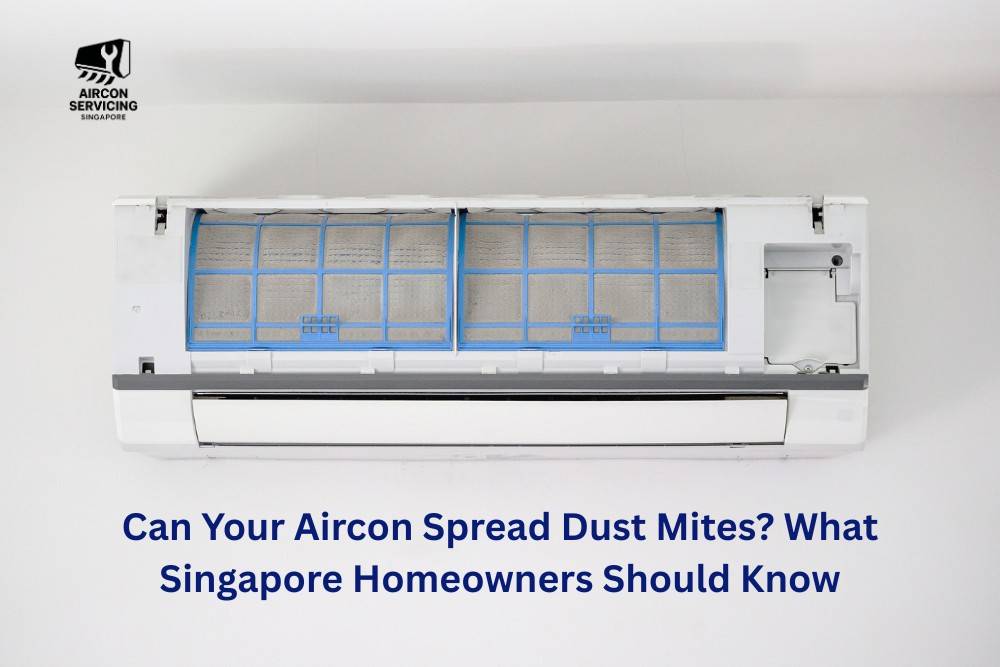
Over time, filters become clogged with:
- Dust
- Hair
- Pet fur
- Fine particles
- Airborne allergens
Once the filter becomes saturated, airflow decreases and indoor air quality begins to decline.
Instead of efficiently trapping contaminants, the system may recirculate them into your living space.
This not only affects your family’s health but also forces your air conditioner to work harder, increasing electricity consumption.
Cooling Coils Can Also Affect Air Quality
Many homeowners focus only on filters.
However, evaporator coils are equally important.
As warm air passes over the cold coil surface, moisture naturally condenses.
If dirt accumulates on these damp surfaces, they become an ideal environment for:
- Mold growth
- Bacteria
- Biofilm
- Unpleasant odours
This is one reason why neglected air conditioners sometimes produce musty smells when switched on.
Professional Aircon Servicing includes cleaning these critical components to improve both cooling performance and indoor air quality.
Signs Your Aircon May Be Affecting Indoor Air Quality
Watch for these warning signs:
- Sneezing increases when the aircon is on.
- Persistent musty or damp smells.
- More dust settling on furniture than usual.
- Family members experience worsening allergies indoors.
- Reduced airflow from the vents.
- Air conditioner struggles to cool rooms efficiently.
- Increased humidity despite running the aircon.
While these symptoms do not automatically indicate dust mites, they often suggest that your system requires professional inspection and cleaning.
Can Aircon Servicing Help Reduce Allergens?
Yes.
Although servicing cannot eliminate dust mites from your home entirely, it significantly reduces the amount of dust and airborne contaminants circulating through your air conditioning system.
Professional servicing typically includes:
- Cleaning or replacing air filters
- Cleaning evaporator coils
- Removing accumulated dust
- Inspecting drainage systems
- Checking airflow performance
- Cleaning blower components
These steps improve overall indoor air quality while helping your air conditioner operate more efficiently.
Additional Ways to Reduce Dust Mites at Home
Aircon servicing works best when combined with good household hygiene practices.
Consider the following:
Wash Bedding Weekly
Use hot water whenever possible to reduce dust mite allergens.
Vacuum Regularly
Use a vacuum cleaner fitted with a HEPA filter for improved dust removal.
Reduce Indoor Humidity
Maintaining humidity below approximately 50–60% makes conditions less favourable for dust mites.
Clean Curtains and Upholstery
Soft furnishings collect significant amounts of dust over time.
Replace Old Air Filters
Filters should be cleaned or replaced according to the manufacturer’s recommendations and household usage.
Why Regular Aircon Servicing Is Essential in Singapore
Because Singapore experiences warm temperatures and high humidity throughout the year, air conditioning systems often operate almost daily.
Without routine maintenance:
- Dust accumulates faster.
- Airflow decreases.
- Cooling efficiency drops.
- Electricity bills increase.
- Indoor air quality deteriorates.
- Components wear out sooner.
Scheduling professional Aircon Servicing Singapore at regular intervals helps maintain healthier indoor air while extending the lifespan of your cooling system.
Breathe Cleaner, Live More Comfortably
Your air conditioner should make your home more comfortable—not contribute to allergy symptoms.
Although air conditioners do not create dust mites, neglected systems can circulate dust, allergens, and other airborne particles that affect indoor air quality.
By combining regular household cleaning with professional Aircon Servicing, homeowners can enjoy cleaner air, improved cooling performance, lower energy consumption, and a healthier indoor environment.
If you notice allergy symptoms, unusual odours, or declining cooling performance, it may be time to have your air conditioning system professionally inspected.
Frequently Asked Questions
Can air conditioners create dust mites?
No. Air conditioners do not create dust mites. Dust mites naturally live in household fabrics such as mattresses, pillows, carpets, and upholstery. However, dirty air conditioning systems can circulate allergens associated with dust mites.
Can dirty air filters make allergies worse?
Yes. Dirty filters may reduce filtration efficiency and allow dust, pollen, pet dander, and other airborne particles to circulate throughout your home.
How often should I schedule Aircon Servicing in Singapore?
Most residential systems benefit from professional servicing every three to four months, depending on usage and environmental conditions.
Can Aircon Servicing improve indoor air quality?
Yes. Professional servicing removes accumulated dust, dirt, and contaminants from critical components, helping improve airflow and overall indoor air quality.
Why does my aircon smell musty?
Musty odours often indicate moisture buildup, mold growth, or dirt accumulation on cooling coils or inside the drainage system. Professional cleaning can usually resolve these issues.
Are HEPA filters better for allergy sufferers?
HEPA filters are highly effective at capturing fine airborne particles. However, compatibility depends on your specific air conditioning system.
Does regular servicing reduce electricity bills?
A clean air conditioning system operates more efficiently, requiring less energy to cool your home. This may help reduce electricity consumption over time.
What are the most common indoor allergens in Singapore homes?
Common indoor allergens include dust mites, mold spores, pet dander, pollen, and household dust. Regular cleaning and professional aircon servicing help minimise their impact.