Imagine coming home after a long, humid day in the Central Business District, only to find your living room feeling like a sauna. You set your unit to 16°C, but the air blowing out is stubbornly warm. For many Singaporeans, this is the moment the “compressor anxiety” kicks in. As the heart of your cooling system, a failed compressor is often the difference between a simple tune-up and a bill that makes you consider replacing the entire system.
The compressor is your aircon’s most vital and costly part. In Singapore’s 2026 market, replacement costs range from S2,500. However, 80% of “failed” compressors are due to minor electrical issues or lack of regular Aircon Servicing. Catching a loud humming or weak cooling early can save you thousands in avoidable replacement costs.
Why The Compressor Is The Heart Of Your Comfort
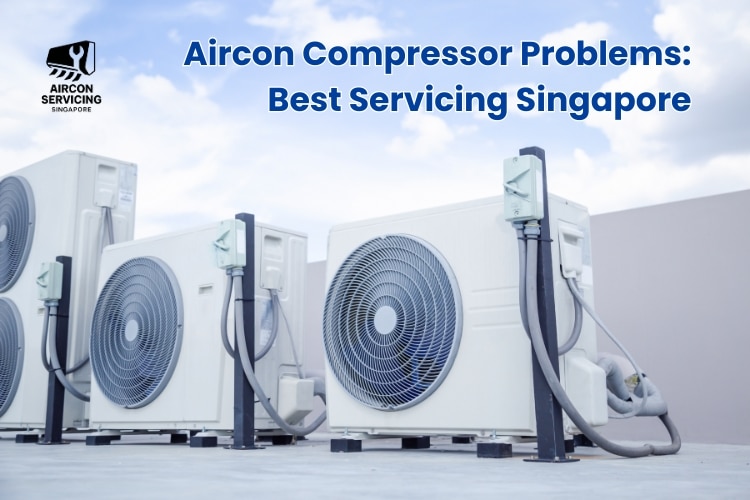
In our tropical climate, your aircon doesn’t just “make cold air.” It moves heat from inside your home to the outside world. The compressor is the pump that makes this possible. According to 2026 energy consumption data, a struggling compressor can spike your SP Group utility bill by up to 35% as it overworks to overcome friction or dirt.
Because Singapore experiences average humidity levels of 84%, our units work roughly 30% harder than those in cooler regions. This constant “heavy lifting” means a neglected compressor in an HDB or condo often fatigues within 6 to 9 years. Conversely, units supported by a consistent aircon servicing contract frequently reach a 15-year lifespan by maintaining optimal internal lubrication.
Prevention vs. Crisis Management
Understanding the math of maintenance helps you avoid the “emergency repair” trap.
| Feature | The “Wait & See” Approach | The Professional Maintenance Way |
|---|---|---|
| Typical Lifespan | 5 – 7 Years | 12 – 15 Years |
| Energy Efficiency | Drops 5% annually due to dirt | Stays near peak “5-Tick” rating |
| Repair Cost (Avg) | S$1,200 (Full replacement) | S150 (Minor parts) |
| Warning Signs | Ignored until total breakdown | Caught during quarterly checks |
| Air Quality | High risk of mold/bacteria | Consistently clean and filtered |
Identifying Common Compressor Red Flags
Most homeowners realize something is wrong only when the cooling stops completely. However, your outdoor unit usually “whispers” its problems long before it dies. Recognizing these signs allows you to book professional aircon servicing before a minor hiccup turns into a mechanical seizure.
- The “Old Bus” Sound: If your outdoor unit rattles or makes a loud grinding noise, the internal bearings are likely failing.
- The Silent Fan: You might see the outdoor fan spinning, but if you don’t hear the deep rumble of the motor, the compressor hasn’t “kicked in.”
- Short Cycling: The unit turns on and off every few minutes. It usually signals an electrical fault or a dangerously overheating system.
- Triple-Digit Bills: An unexplained jump in your electricity cost often means the compressor is struggling against a “choked” condenser coil.
Real-World Scenarios: Saving The “Heart”
The Bedok “False Alarm”
Mr. Tan thought his 8-year-old Mitsubishi unit was over when it stopped blowing cold air. He found that the S150 start-capacitor had failed. A 20-minute fix saved him nearly S$1,000.
The Jurong Overheating Case
A commercial office was facing frequent system trips during the 2026 April heatwave. The outdoor units were choked with dust and grime, causing the compressors to hit “thermal overload.” After a thorough commercial aircon servicing and condenser chemical wash, the operating temperature dropped by 12°C, and the system stabilized immediately.
Frequently Asked Questions
How much is aircon servicing in Singapore for 2026?
Standard aircon servicing price in Singapore ranges from S70 per unit for basic cleaning. For more intensive care, a chemical wash usually costs between S180. Investing in an aircon servicing package is typically the most cost-effective way to ensure your compressor stays under warranty and runs efficiently year-round.
Can a noisy aircon compressor be repaired?
It depends on the sound. If the noise is due to a faulty fan motor or a vibrating casing, it is a cheap and easy fix. However, internal metallic grinding often results in mechanical valve damage. In these cases, our aircon servicing & repair Singapore experts will help you weigh the cost of a new part versus a full system upgrade.
How often should I have my aircon serviced to protect the compressor?
For residential units used daily, we recommend aircon servicing in Singapore every 3 months. In a high-humidity environment like ours, dust buildup on the outdoor coils forces the compressor to run at higher pressures. Regular cleaning prevents this “straining,” which is the leading cause of premature compressor failure in local HDBs.
Is it worth replacing a compressor on an old unit?
If your unit is over 10 years old and uses the phased-out R22 refrigerant, replacing the compressor is rarely wise. Newer “5-Tick” inverter models use R32 gas, which is 67% more eco-friendly and significantly cheaper to run. We often suggest a replacement if the aircon servicing cost in Singapore for the repair exceeds 50% of a new unit’s price.
Why is my aircon compressor not turning on?
The most common culprits are a blown capacitor, a tripped circuit breaker, or a faulty PCB (printed circuit board). These are electrical issues, not mechanical ones. Before assuming you need a new compressor, ask for a “grounded winding” test. This simple check confirms if the motor is actually dead or just lacking the electrical “kick” to start.
Restore Your Home’s Cooling Peace Of Mind
Don’t let a minor maintenance gap turn into a major financial burden. A well-maintained compressor is the secret to a low electricity bill and a consistently chilled home. Whether you need a one-time check or the best aircon servicing Singapore has to offer, our team is ready to provide the professional care your system deserves.
Contact Aircon Servicing Singapore today to book your diagnostic check. Secure your comfort with our transparent pricing and expert technicians who prioritize your home’s efficiency.