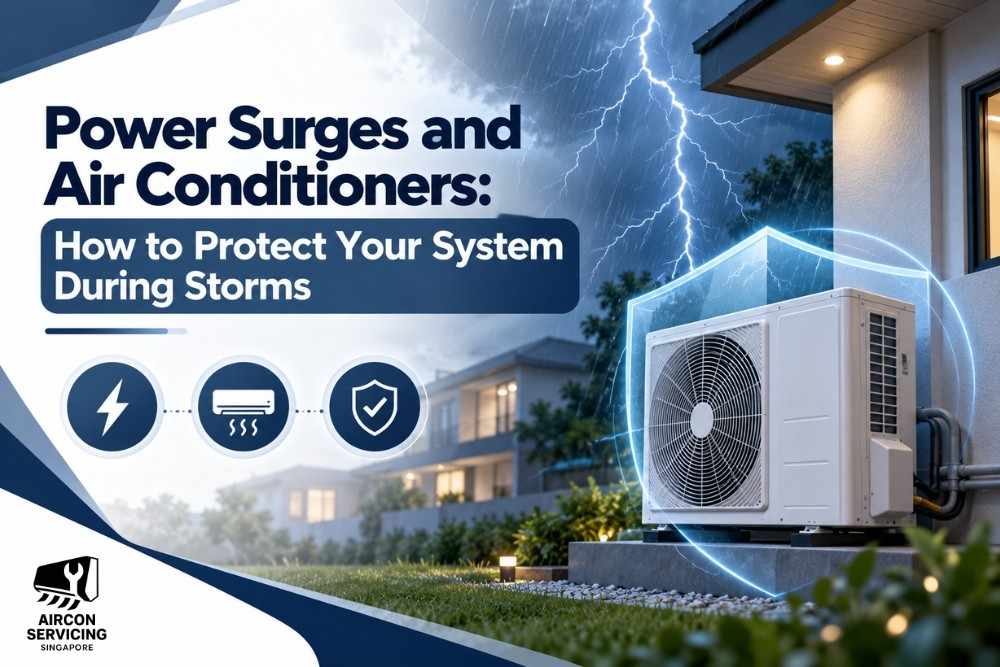
Power surges from lightning storms send sudden high-voltage spikes through residential power lines, frying delicate inverter printed circuit boards (PCBs) and damaging compressor motor windings. Installing surge protection devices, powering down air conditioners during severe weather, and scheduling routine electrical maintenance shield expensive cooling equipment from irreversible storm damage.
A sudden thunderstorm rolls across Singapore, and the sky turns completely dark. Heavy rain lashes against your bedroom window while the air conditioner hums quietly. Suddenly, a deafening thunderclap rattles your room, and your fan unit stops blowing cold air instantly. Professional Aircon Servicing ensures your cooling system withstands volatile electrical weather before expensive electronic parts suffer permanent burnouts.
Singapore ranks among the lightning capitals of the world. Meteorological records document an average of 176 lightning days across the island every single year. High-voltage strikes do not need to hit your building directly to cause immense mechanical harm. Instead, intense electromagnetic pulses travel across shared power grids, sending thousands of excess volts into local living spaces.
Modern inverter units rely heavily on sensitive microprocessors to regulate compressor speed and indoor temperature. When high-voltage spikes slip past standard home consumer units, they melt delicate circuit traces instantly. Taking proactive protective steps prevents costly component failures and preserves your daily household comfort.
The Hidden Path of Storm Surges in Singapore Homes
Residential building codes require lightning protection rods on all high-rise housing blocks and private estates. These lightning rods direct strikes safely down into the earth. However, nearby ground discharges still induce secondary voltage spikes along substation lines and consumer mains. These microsecond spikes slip unnoticed through domestic wiring until reaching your running appliances.
Unprotected inverter printed circuit boards take the brunt of this electrical strain. A sudden voltage spike often results in your aircon tripping the circuit breaker repeatedly when you try restarting the cooling network. Frequent tripping signals that internal capacitors or control modules have sustained hidden thermal stress. Ignoring these warning signs forces the unit to operate under uneven electrical currents.
Furthermore, severe monsoon rains often introduce moisture into outdoor compressor isolator switches. Water ingress combined with electrical voltage fluctuations causes rapid short circuits on external condenser ledges. Professional electrical inspections uncover worn seals before rainstorms cause extensive wiring faults.
Comparing Storm Protection Approaches
The table below contrasts common homeowner habits during bad weather with strategic surge protection practices.
| Protection Approach | Reactive Homeowner Habit | Strategic Protection Method |
|---|---|---|
| System State in Storms | Leaving aircon running continuously on high fan | Switching off the unit and turning off the wall switch |
| Surge Defense | Relying solely on basic distribution board trips | Installing dedicated Type 2 surge protective devices |
| Component Health | Waiting until cooling fails completely | Scheduling bi-annual electrical capacitor inspections |
| Post-Storm Actions | Powering unit back on immediately after thunder stops | Waiting fifteen minutes for grid voltages to stabilize |
| Cost Consequence | Paying heavy fees for replacement compressor parts | Extending compressor lifespan through minimal upkeep |
How Lightning Spikes Damage Cooling Hardware
High-voltage storm surges destroy air conditioning hardware through distinct physical failure modes.
- Inverter PCB Board Meltdown: Overvoltage disintegrates thin copper pathways on printed circuit boards, disabling communication between split indoor units and outdoor condensers.
- Compressor Motor Winding Breakdown: Sudden current spikes melt insulation around copper motor coils, causing irreversible motor burnouts.
- Capacitor Rupture: Run and start capacitors absorb excessive voltage spikes, bulging or leaking fluid until the fan blower motor fails to start.
- Corroded Isolator Switch Contacts: Moisture penetration inside external isolator switches causes electrical arcing whenever power fluctuates during heavy rain.
Step-by-Step Storm Protection Framework
Follow this simple four-step guide to keep your cooling equipment safe during monsoon downpours.
- Power Down the Appliance Before Severe Thunder: Turn off your split fan coil using your remote control, then turn off the main wall double-pole switch.
Practitioner Insight: Turning off the unit with your remote control leaves internal standby circuits energized, so always switch off the dedicated wall isolator to cut physical current.
- Install a Dedicated Distribution Board Surge Protector: Hire a licensed electrical technician to install a Type 2 Surge Protective Device (SPD) inside your main consumer distribution box.
Practitioner Insight: In our field maintenance visits across older HDB flats, installing a central SPD cut electronic board failure rates by over 80%.
- Check Outdoor Compressor Isolator Enclosures: Inspect your outdoor condenser ledge to confirm the weatherproof isolator box shows no cracks or loose gaskets.
Practitioner Insight: High-rise units in coastal zones experience heavy rains that wear down silicone seals faster than inland properties.
- Inspect Motor Coil Resistance Regularly: Book regular maintenance to check motor winding resistance and replace tired run capacitors before the monsoon season starts.
Practitioner Insight: Catching capacitor deterioration early stops cascading aircon compressor problems that cost thousands of dollars to rectify later.
Real-Life Scenario: A Tampines Condominium Save
A family residing in an executive condominium in Tampines kept two multi-split air conditioners running during a heavy November squall. A severe lightning strike hit an adjacent open field, sending an electrical surge back through the shared neighborhood substation. The living room aircon instantly clicked off, emitting a faint burning odor from the outdoor ledge.
The homeowner attempted to reset the tripped breaker three times, but the switch snapped back down immediately. Fearing severe motor damage, they contacted our technical diagnostic team for an emergency assessment. Our technicians arrived with digital multimeters and found that the outdoor inverter board had absorbed a direct high-voltage spike.
Fortunately, their compressor motor coils remained intact. We replaced the fried printed circuit board, installed a high-capacity surge protection module, and sealed their weathered outdoor isolator switch against moisture. The homeowner saved over twelve hundred dollars compared to purchasing an entirely new condensing unit.
Long-Term Benefits of Strategic Surge Defense
Investing in comprehensive electrical defense yields tangible benefits for homeowners across Singapore.
- Lower Replacement Costs: Shielding inverter control boards prevents expensive diagnostic bills and lengthy replacement lead times.
- Enhanced Residential Safety: Preventing electrical arcing on outdoor ledges lowers residential fire risks during turbulent electrical storms.
- Preserved System Efficiency: Stable operating currents ensure cooling compressors maintain optimal thermodynamic compression cycles.
- Extended Equipment Lifespan: Protecting sensitive microprocessors prevents progressive silicon fatigue, keeping your units running cold for over a decade.
Frequently Asked Questions
Can I run my air conditioner during a heavy thunderstorm in Singapore?
You should turn off your air conditioner during severe thunderstorms whenever lightning strikes nearby. While high-rise buildings have lightning arrestors, electromagnetic surges can still enter home wiring and fry delicate inverter circuit boards. Switching off both your remote control and the main wall power switch provides complete isolation from dangerous incoming power spikes.
Does my standard home circuit breaker protect against lightning surges?
No, a standard miniature circuit breaker or Earth Leakage Circuit Breaker does not stop lightning surges. Standard breakers detect sustained electrical overloads and ground faults, tripping over milliseconds. A lightning power surge passes within microseconds, destroying sensitive silicon chips before a standard household trip switch can react.
What should I do if my air conditioner trips the power breaker after a storm?
Leave the power switch off and avoid forcing the breaker back up repeatedly. Persistent tripping suggests a short-circuited inverter board, a burned compressor winding, or water inside the outdoor isolator box. Contact a certified technician to test circuit resistance safely before restoring electrical power.
How much does it cost to replace a damaged inverter aircon PCB?
Replacing a burned inverter printed circuit board typically costs between two hundred and five hundred dollars, depending on system brand and capacity. Procuring proprietary boards for older discontinued models can take weeks. Installing preventative surge arrestors costs significantly less than a single emergency motherboard replacement.
How long should I wait before turning my air conditioning back on after a storm?
Wait at least fifteen to twenty minutes after the thunderstorm clears before restoring power to your cooling units. Grid voltage frequently fluctuates as regional power providers redirect electrical loads and clear substation interruptions. Letting the local power supply settle prevents secondary voltage spikes from damaging running motors.
Protect Your Comfort with Professional Aircon Servicing
Extreme tropical weather places continuous stress on residential cooling investments. Simple preventive habits shield your home from unexpected repair bills and sweaty, restless nights. Giving your air conditioning units the electrical care they need ensures reliable comfort for your family throughout every storm season.
Aircon Servicing Singapore provides end-to-end diagnostic evaluations, electrical safety audits, and expert seasonal maintenance. Our licensed technicians verify circuit safety, test compressor health, and replace fragile electrical components across all major cooling brands. Schedule your comprehensive Aircon Servicing today to keep your home cool, safe, and resilient in any weather.