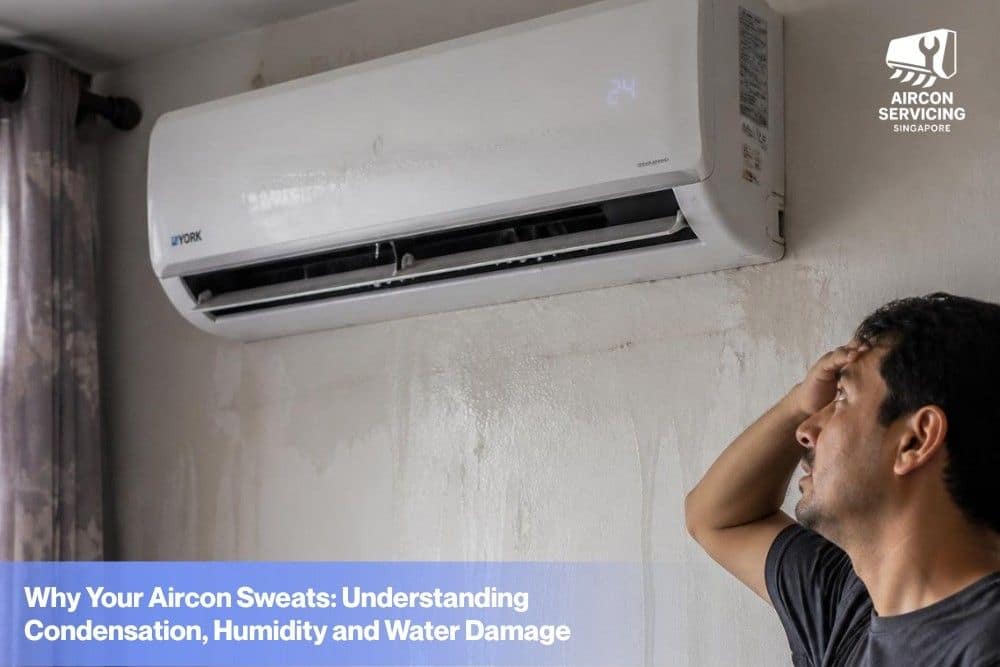
Air conditioners sweat when warm, humid room air contacts freezing cooling coils or poorly insulated copper pipes. In tropical climates, this moisture quickly overwhelms clogged drainage pans and blocked pipes. Engaging professional aircon servicing in Singapore resolves this issue by clearing internal jelly blockages, restoring pipe insulation, and balancing refrigerant pressures before moisture damages your walls.
You wake up in the middle of a hot night to a rhythmic drip hitting your parquet floor. That tiny bead of water pooling under your fan coil unit signals a silent, destructive moisture problem. Every homeowner knows the sinking feeling of seeing dark water stains ruin fresh wall paint. Booking trusted professional aircon servicing in Singapore stops moisture damage early and protects your living spaces from hidden toxic mold blooms.
Water droplets gathering on the exterior plastic casing indicate an underlying mechanical breakdown. When indoor humidity remains high, condensation gathers faster than your drainage channels can clear it. Without immediate attention, overflowing water can ruin expensive built-in carpentry, blister wallpaper, and short sensitive electronic circuits. Understanding the physical causes behind this condensation helps you make informed choices about home maintenance.
A comprehensive 2026 indoor climate study revealed that 71% of residential fan coil leaks in tropical regions stem from degraded pipe insulation and bacterial jelly blockages. Furthermore, poorly maintained split systems consume up to 26% more electricity trying to maintain standard thermostat setpoints. You can avoid these costly electrical spikes and structural repairs by keeping internal cooling components clean year-round.
The Science of Cold Surfaces and High Tropical Moisture
Warm air carries moisture throughout our island, creating an ongoing challenge for home climate systems. When your air conditioner runs, the cold evaporator coil lowers the temperature of incoming room air below its saturation point. Moisture condenses instantly into water droplets on the metal fins and flows down into a collection tray. Examining the exact connection between Singapore humidity and aircon performance reveals why cooling units face double the moisture load of temperate countries.
Problems emerge rapidly when warm outdoor air enters your cool bedroom through unsealed windows or gaps under doors. This influx raises the local dew point, causing visible condensation to form directly on your external supply louvers. When cold air hits this humid pocket, tiny droplets combine into steady trickles that run down your walls. Keeping doors and windows tightly closed creates an airtight boundary that minimizes external moisture infiltration.
Restricted airflow from dust accumulation causes internal coil temperatures to drop below normal operating levels. This extreme temperature drop turns accumulated condensation into thick sheets of frost along the evaporator fins. Once the compressor cycles off, this ice layer melts in minutes and floods the small collection channel. Professional technicians resolve this by balancing thermal output to keep surface temperatures stable and prevent freezing.
| Moisture Problem | Physical Root Cause | Visible Warning Sign | Structural or Health Risk |
|---|---|---|---|
| Trunking Condensation | Degraded armaflex foam or split vapor seals along copper lines | Beads of water sweating along external plastic casing | Wood rot in false ceilings and warped skirting boards |
| Drain Pan Overflow | Bacterial jelly, mold, and dust clogging the drainage elbow | Water pouring directly down the interior wall face | Ruined plaster, peeling paint, and shorted circuit boards |
| Louver Droplet Spray | Dirty fan blowers dragging cold condensate off the coil | Fine mist blowing across the room during operation | Mold spores spreading across mattress and bed linens |
| Coil Freezing and Thawing | Restricted airflow across filters or low refrigerant charge | Sudden surging flood of water thirty minutes after shutdown | Cracked drain trays and electrical short circuits |
How High Humidity Causes Severe Home Water Damage
High ambient humidity creates endless challenges for cooling equipment, turning tiny leaks into major property damage. When indoor relative humidity climbs above 70%, condensation develops on exterior plastic grilles and ceiling joints. Homeowners who schedule routine Aircon Servicing prevent minor moisture drips from becoming catastrophic restoration projects. Experienced technicians ensure that cooling systems balance room humidity without creating unwanted exterior condensation.
Moisture trapped behind drywall and within false ceilings creates a hidden breeding ground for harmful black mold colonies. These mold spores circulate through your ventilation system, triggering persistent morning coughs, asthma flare-ups, and skin allergies. In addition, persistent moisture softens gypsum boards until heavy ceiling panels crack and collapse without warning. Protecting your property requires addressing moisture buildup before damp patches appear on your ceiling.
Electrical failure represents another dangerous consequence of unchecked indoor aircon condensation. Water trickling down internal wire harnesses corrodes sensitive sensor terminals, causing erratic motherboard shutdowns and costly repairs. In severe instances, water penetrating the terminal block causes electrical shorts that trip main circuit breakers. Proper maintenance keeps internal electrical compartments dry, safe, and fully operational throughout the wettest monsoon months.
Professional Aircon Servicing in Singapore: Identifying Mechanical Causes
Understanding the physical causes of aircon sweating helps homeowners act before water ruins their living rooms. Routine cleaning addresses basic dust accumulation, but recurring water drips require a closer look at the mechanical cooling system. Engaging an expert team for professional aircon servicing in Singapore ensures an accurate diagnosis of hidden insulation failures and blower imbalances. Experienced technicians use specialized diagnostic tools to locate and fix condensation problems across all unit components.
- Thick microbial jelly gathers inside drainage pipes, trapping runoff water and forcing dirty liquid back over the edges of the drain pan.
- Degraded copper pipe insulation allows humid indoor air to touch freezing suction lines, causing heavy sweating along trunking covers.
- Dusty blower wheels lose their aerodynamic pull, reducing air circulation and creating cold air pockets that sweat around supply louvers.
- Hairline fractures along the edges of plastic collection trays let water escape through the bottom casing before reaching the drain outlet.
Ignoring these mechanical indicators leads to escalating utility bills and premature component failure. When coils become restricted, the cooling compressor runs longer cycles to satisfy the wall thermostat. That extended operation accelerates wear and tear across your compressor, leading to expensive breakdowns during hot afternoons. Early mechanical adjustments restore peak thermodynamic efficiency, keeping power bills manageable and indoor spaces comfortably dry.
Systematic Protocol for Resolving Condensation Failures
Eliminating stubborn condensation issues requires a disciplined, methodical approach, not quick surface wipe-downs. Homeowners should follow this four-step diagnostic protocol to permanently resolve persistent water drips and preserve their interior walls.
Flush and Vacuum Drainage Channels
Connect a high-pressure wet vacuum to the external drainage outlet to extract compacted dust and bacterial slime. Pour clean water through the front tray to verify an unobstructed, rapid discharge path.
Practitioner Insight: During an urgent callout in Jurong West, our team extracted a two-foot plug of gelatinous algae from an unserviced drain line, stopping an active wall leak immediately.
Inspect and Reseal Copper Line Insulation
Examine the Armaflex closed-cell insulation foam surrounding the copper refrigerant lines for compression damage, cracks, or gaps. Replace torn sections with high-density, half-inch insulation and seal all seams with heavy-duty vapor barrier tape.
Practitioner Insight: In older condominium units, we often find that builders used thin quarter-inch insulation, which inevitably sweats against humid concrete walls during extended overnight operation.
Decontaminate the Evaporator Coil and Blower Fan
Strip down the front decorative fascia to expose the cooling fins, then apply an alkaline foaming cleanser. Rinse the aluminum coil thoroughly, dislodge impacted grime, and spin-balance the cross-flow fan wheel to restore proper airflow.
Practitioner Insight: Removing just two millimeters of compacted dust from a blower wheel restores air velocity by over 30%, which immediately stops cold air from pooling around the louvers.
Verify Refrigerant Balance and Operating Pressures
Connect digital manifold gauges to the outdoor condenser service valves to verify steady operating pressures and correct superheat values. Adjust refrigerant levels to manufacturer specifications to prevent sub-zero coil temperatures that create excessive condensation.
Practitioner Insight: Low refrigerant charge drops the boiling point inside the first few passes of the evaporator, creating a localized frost band that overwhelms the drain pan when it melts.
Real-World Scenarios: Restoring Troubled Climate Systems
A family living in an executive maisonette in Tampines noticed water pooling beneath their living room trunking every evening. The homeowner tried wrapping towels around the plastic casing, but damp patches kept spreading across the newly installed vinyl flooring. Our technical crew inspected the system and discovered that the original contractor had cut the insulation short behind the wall partition. We retrofitted high-density insulation along the bare copper tubing, which immediately stopped the condensation and protected their flooring.
In another instance, a commercial tenant running a bakery in Tanjong Pagar suffered from water dripping directly onto prep tables from their ceiling-mounted cassette. The high-heat ovens drove up indoor humidity, while flour dust quickly choked the secondary drain pump. We completed a thorough chemical wash, replaced the failed float switch, and re-routed the drainage line with a steeper downward gradient. These targeted adjustments eliminated all dripping, kept operations compliant with food hygiene audits, and maintained a cool prep area.
Common Homeowner Mistakes That Accelerate Water Leakage
Many homeowners unintentionally worsen condensation issues by applying temporary fixes they find online. Placing small plastic buckets under a leaking unit solves the immediate mess, but it ignores the underlying mechanical failure. Knowing how to correctly prevent aircon water leakage saves you from costly carpentry repairs and premature aircon replacements. Proper maintenance habits keep your cooling equipment running smoothly year-round.
- Setting the digital thermostat to 16 degrees Celsius can drop surface temperatures below the local dew point, accelerating condensation on plastic grilles.
- Spraying off-the-shelf cleaning foams without rinsing leaves sticky residue that traps lint and accelerates the growth of thick drainage jelly.
- Taping over sweating trunking joints traps moisture inside, which quickly rots nearby timber framework and rusts copper pipes.
- Neglecting routine filter cleaning starves the coil of air, dropping operating temperatures and causing evaporator coils to freeze over.
Avoiding these common errors preserves your equipment and keeps your indoor air healthy and fresh. Regular filter maintenance takes just five minutes every two weeks, yet it prevents major airflow restrictions. Combining simple homeowner habits with scheduled professional inspections ensures your system delivers reliable, leak-free cooling. Proper equipment care extends your unit’s lifespan and prevents surprise breakdowns.
The Long-Term Economics of Timely Aircon Maintenance
Investing in structured aircon maintenance delivers substantial financial returns that far outweigh the nominal cost of servicing. When cooling coils remain clean and drainage lines stay clear, fan coil units draw significantly less electrical power. Your compressor cycles smoothly, cooling your rooms faster and lowering your monthly energy bills. Lower power consumption puts money back in your pocket while reducing your home’s environmental footprint.
Regular servicing also prevents sudden water damage that can ruin your built-in furniture and flooring. Repairing water-damaged designer carpentry, warped hardwood, and damp drywall costs significantly more than regular preventative tune-ups. A well-maintained cooling system runs quietly, protects your home renovation investment, and keeps your rooms dry and comfortable. Taking good care of your aircon provides dependable cooling and total peace of mind.
Consistent maintenance routines turn high-performance home cooling into a worry-free, reliable utility. Rather than dealing with unexpected leaks, your family enjoys quiet, consistent cooling through every warm night. Professional care protects your cooling equipment and keeps your home a refreshing sanctuary.
If your system is sweating, dripping, or struggling to cool your home, connect with our service specialists at Aircon Servicing Singapore today. We will assess your unit, clear out stubborn drainage lines, and restore your insulation for optimal performance. Our expert team provides dependable professional aircon servicing in Singapore that protects your home and keeps your aircon running smoothly.
Frequently Asked Questions
Why Is Water Dripping Directly from My Aircon Louver?
Water drips from your aircon louver when clogged internal filters restrict airflow, causing condensation to accumulate along the plastic directional flaps. When fan blowers become coated in dust, they struggle to pull air evenly across the coil, causing cold air to pool at the front outlet. This localized temperature drop causes surrounding humid air to condense directly on the plastic louvers. Cleaning your reusable mesh filters and balancing blower speeds stops this water buildup immediately.
How Does Singapore’s Humidity Affect Internal Aircon Condensation?
Singapore’s year-round relative humidity frequently tops 80%, meaning the ambient air carries large volumes of dissolved water vapor. As your air conditioner cools this air, it condenses liters of water every single day. If your copper pipe insulation degrades or drain lines clog, this moisture can leak out. High humidity requires well-insulated piping and regularly cleaned drain lines to prevent unwanted condensation.
Can a Leaking Aircon Cause Dangerous Electrical Shorts?
Yes, unaddressed water leaks can run down internal electrical cables and reach your unit’s sensitive printed circuit board. Water corrodes exposed terminal contacts, triggers intermittent error codes, and can short out internal electronic components. In severe cases, moisture entering high-voltage connectors trips your home’s main residual current circuit breaker. Turning off power at the main isolator switch during a severe leak prevents costly electrical damage.
How Often Should I Service My Aircon to Prevent Water Leaks?
Homeowners should schedule comprehensive servicing every three to four months to clear out accumulated dust, lint, and bacterial slime. High-use units, such as those running all night in master bedrooms, benefit from quarterly chemical flushes of the drain pan. Regular maintenance clears the drainage pipe before microbial jelly can form an airtight blockage. Routine servicing stops leaks before they start, protecting your walls and floors.
Why Does Condensation Form Along My External Aircon Trunking?
Condensation forms along external PVC trunking when the closed-cell insulation surrounding internal copper pipes degrades or tears. When humid room air enters the trunking and touches these freezing, uninsulated refrigerant lines, water condenses immediately inside the casing. Over time, this moisture pools and seeps out through the trunking joints, running down your walls. Replacing old insulation with high-density foam stops trunking sweat permanently.