Living in our intense, year-round Singapore climate makes a well-functioning air conditioner essential for daily survival. Many homeowners experience the frustration of running their cooling systems for hours, only to be met with skyrocketing utility bills or a room that still feels uncomfortably sticky. They assume a simple chemical wash or top-up will fix the problem, unaware that the underlying issue stems from a fundamental mismatch between the unit’s physical cooling capacity and the actual dimensions of the space.
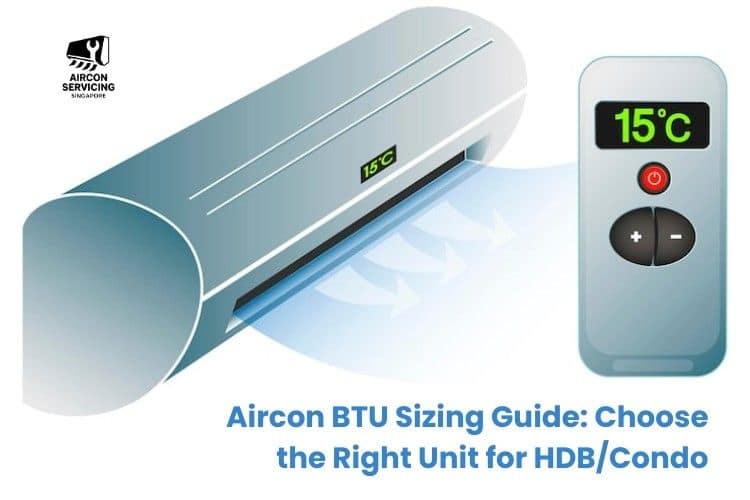
Selecting the correct aircon size requires matching the room’s total square footage with the appropriate British Thermal Unit (BTU) rating. For a standard HDB bedroom, a 9,000 BTU unit is ideal. Large open-concept living areas require 18,000 to 24,000 BTU systems. Choosing an incorrect capacity forces compressors to work overtime, operate in short cycles, or fail prematurely, which ultimately drives up operational and maintenance costs.
Why Incorrect Sizing Damages Equipment and Inflates Utility Bills
National Environment Agency (NEA) consumer tracking reports indicate that space cooling accounts for approximately 37% of a typical Singapore household’s total electricity consumption. Despite this massive financial impact, thousands of homes operate systems with incorrect thermal capacity allocations. When an aircon is undersized for a room, the compressor runs continuously without ever reaching the thermostat’s target temperature. This relentless workload accelerates component degradation, leading to frequent fan motor burnouts and premature system breakdowns.
Conversely, installing an oversized air conditioning unit introduces a hidden set of severe operational performance issues. An overly powerful system cools the indoor air exceptionally fast but shuts off before completing a full dehumidification cycle. It creates a cold, clammy, and sticky environment because the evaporator coil fails to effectively extract latent atmospheric moisture. Furthermore, the constant rapid starting and stopping—known technically as short-cycling—inflicts severe wear on the inverter compressor, causing your monthly SP Group utility bills to surge unexpectedly.
Incorrect Aircon Sizing (BTU Mismatch)
│
┌──────────┴──────────┐
▼ ▼
[Undersized Unit] [Oversized Unit]
│ │
Continuous Run Rapid Short-Cycling
│ │
Component Burnout Sticky, Humid Air
│ │
└──────────┬──────────┘
▼
Sky-High Utility Bills & System Failure
To counter these structural risks, property owners must understand how environmental factors modify local thermal loads. For instance, top-floor units facing direct afternoon sun require a mandatory 10% buffering increase in base cooling capacity. Similarly, large glass windows, high ceilings, and heat-emitting home appliances elevate the necessary cooling output. Regular aircon servicing helps maintain original operational efficiency, but it cannot fix the mechanical stress caused by an inherently miscalculated BTU layout.
Strategic BTU Sizing Framework for Singapore Properties
Selecting a residential or commercial system involves matching your specific floor area to certified cooling outputs. This technical framework outlines the standard requirements across common HDB flats, condominiums, and commercial layouts.
| Room Type | Average Floor Area (Sq Ft) | Recommended Capacity (BTU/hr) | Ideal System Configuration |
|---|---|---|---|
| Small Study / Maid’s Room | Up to 90 | 6,000 to 7,000 | System 2 / 3 Wall Mounted |
| Standard HDB / Condo Bedroom | 90 to 180 | 9,000 | Multi-Split Inverter System |
| Primary Bedroom (Executive Condo) | 180 to 250 | 12,000 | Single-Split / Multi-Split |
| 3-Room / 4-Room Living Area | 250 to 400 | 18,000 | Large Wall-Mounted Split |
| 5-Room / Open-Concept Lounge | 400 to 550 | 22,000 to 24,000 | Ceiling Cassette / Dual Split |
Practical Situation: Resolving High Humidity in a Punggol BTO Flat
A family residing in a newly renovated 4-room BTO flat in Punggol faced persistent indoor comfort issues. Despite setting their newly installed living room aircon to 21°C, the space constantly felt damp, and faint mold patches began appearing near the curtains. Their initial reaction was to search for cheap aircon servicing to check for potential gas leaks or blocked drain lines. The onsite diagnostic assessment revealed that the system was entirely clear of physical debris or mechanical faults.
Instead, the investigation found that the previous contractor had installed an oversized 28,000 BTU commercial-grade unit in a space that required only 18,000 BTUs. The massive unit reached the target temperature within minutes and immediately shut down, leaving the relative humidity level hovering at an uncomfortable 78%. To rectify this, the homeowners utilized an aircon servicing package to re-balance the multi-split configuration, replacing the indoor unit with an appropriately sized evaporator.
Within weeks of down-sizing to the correct cooling capacity, the indoor humidity dropped to a comfortable, healthy 55%. Additionally, their monthly household electricity bill decreased by 22% due to more prolonged, efficient inverter cooling cycles. This real-world scenario demonstrates that bigger is definitely not better when it comes to managing indoor thermal comfort.
Core Operational Signs Your Aircon Capacity Is Misaligned
Recognizing capacity issues early protects your investment from catastrophic mechanical failure. Watch for these physical indicators to determine if your current configuration matches your structural space requirements.
- The Compressor Never Shuts Off: An undersized unit running continuously for hours without lowering the room temperature indicates an insufficient BTU capacity.
- Frequent On-and-Off Cycling: An oversized unit shutting down every 10 minutes indicates rapid short-cycling, which degrades your inverter electronics.
- Pristine Filters with High Energy Bills: Spikes in electricity usage despite clean filters mean the system is structurally mismatched to the thermal load.
- Cold but Clammy Indoor Air: High humidity levels paired with cold air delivery cause the unit to cool too quickly, preventing it from extracting water vapor.
If you notice these system behaviors, the next best step is to arrange a comprehensive inspection through premium aircon servicing in Singapore. Experienced technicians can calculate your exact room parameters to verify if an adjustment is required. Capitalizing on professional engineering insights protects your home from unnecessary component replacements.
Maximizing System Longevity Through Structured Care
Once you install the perfect cooling capacity, maintaining high operational efficiency requires an intentional, long-term maintenance approach. Neglecting maintenance can degrade your unit’s cooling performance by up to 15% in the first two years.
- Establish an Aircon Servicing Contract: Regular multi-point inspections ensure electrical contactors, thermistors, and fan speeds operate at peak design specifications.
- Track Your Aircon Servicing Price: Avoid incredibly suspicious, low-cost offers that skimp on proper condenser coil wash protocols or pressure testing.
- Prioritize Professional Aircon Servicing: Certified technicians understand how to clear dense bio-films from drainage pans without cracking delicate plastic housings.
- Clean Internal Filters Monthly: Keeping dust accumulation low ensures your system maintains the precise volumetric airflow required for its BTU rating.
Enrolling in a structured aircon servicing Singapore price plan allows families to budget predictably for annual energy-optimization checks. Regular technical care ensures your 5-tick energy-rated system actually delivers the long-term utility savings promised by the manufacturer. Choosing a reliable, professional team keeps your living spaces crisp, healthy, and perfectly balanced.
Frequently Asked Questions
What BTU aircon do I need for a 4-room HDB living room?
A standard 4-room HDB flat living room generally requires an air conditioner with a cooling capacity of 18,000 BTU. However, if your living area features an open-concept layout that connects directly to the dining room or kitchen, you should consider upgrading to a 22,000- or 24,000-BTU system. It prevents the unit from overworking and ensures even cooling distribution throughout the entire daytime common zone.
Why does my room feel cold but sticky or humid?
This uncomfortable sensation happens when your air conditioner has an oversized BTU capacity for the room dimensions. The unit cools the physical air space so rapidly that it satisfies the thermostat setting and shuts down before completing its dehumidification cycle. Because the system runs for too short a time to pull water vapor out of the air, you will have to live with cold, highly humid indoor air.
How often should you book aircon servicing in Singapore?
For residential properties in Singapore, book standard Singapore aircon servicing once every 3 to 4 months. If your household operates the units daily for extended periods exceeding 8 hours, moving to a quarterly schedule is highly recommended. Commercial properties and high-traffic offices require monthly maintenance checks to meet intense cooling demands and optimize air filtration systems.
What is the difference between an inverter and a non-inverter aircon?
An inverter aircon uses an advanced variable-speed compressor motor that slows down or speeds up dynamically to maintain a precise temperature without shutting off. A non-inverter system operates on an all-or-nothing basis, running at maximum speed before shutting off entirely as the room cools. Inverter units cost more upfront but use up to 50% less electricity, making them highly economical for local homes.
Can an undersized aircon cause water leaking issues?
Yes, an undersized unit can indirectly trigger water leakage because it has to run continuously at maximum capacity to cool the oversized room. This relentless operation can cause the evaporator coils to freeze over completely, forming thick layers of internal ice. When the ice eventually melts during off-periods, the sheer volume of water overflows the internal drainage pan, leaking down your walls.
Partnering with Singapore’s Premier Aircon Experts
Achieving a perfectly balanced indoor climate requires technical expertise, exact math, and deep mechanical experience. The engineering team at Aircon Servicing Singapore specializes in diagnosing capacity mismatches, performing precision maintenance, and restoring peak operational efficiency to struggling systems. Let our experienced technicians assess your home’s unique thermal loads so you can enjoy reliable, energy-efficient cooling for years to come.