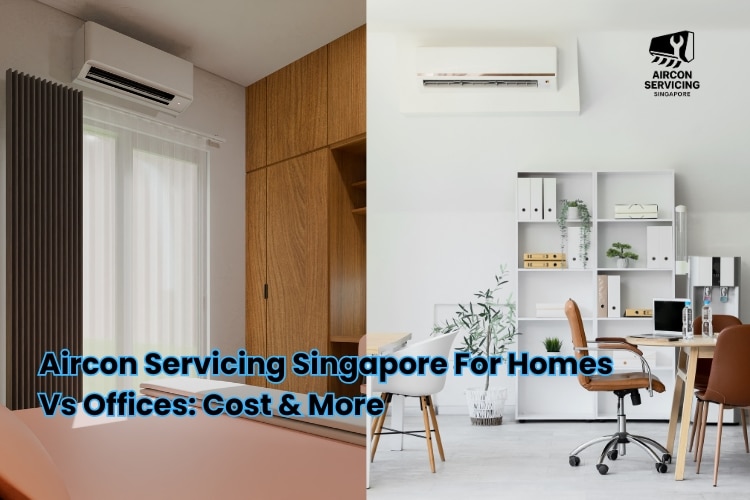
Your home aircon cools a bedroom. Your office system cools people, equipment, and productivity. On the surface, both push out cold air. In reality, they operate under very different demands. That difference explains why aircon servicing Singapore for offices often costs more and follows stricter rules.
Many business owners assume that servicing works the same everywhere. They compare prices, feel confused, and delay action. This gap in understanding leads to breakdowns, complaints, and rising energy bills. Understanding how residential and commercial aircon servicing differ helps you plan more effectively and avoid costly surprises.
Why Homes And Offices Place Different Demands On Aircon Systems
Residential units run for comfort. Office systems run for continuity. Homes cool a few rooms for only a few hours. Offices cool larger spaces for long periods, often with people, servers, and lighting that add constant heat.
As a result, commercial systems face heavier load cycles and tighter tolerance for downtime. A short failure at home feels inconvenient. A failure at work disrupts operations. That pressure affects how aircon servicing should be planned and executed.
It’s why professional aircon servicing for offices prioritizes reliability over appearance.
System Design Differences That Affect Servicing
Most homes use wall-mounted split or multi-split systems. Offices often rely on cassette, ducted, or VRF setups. These designs distribute air differently and use more complex control logic.
Commercial systems include multiple zones, longer piping, and higher refrigerant volumes. As a result, inspections take longer and require deeper checks. Technicians assess airflow balance, load distribution, and safety compliance.
That extra complexity explains why commercial aircon servicing requires more time, expertise, and equipment than standard residential jobs.
Why Commercial Aircon Servicing Costs More
Price differences do not come from branding. They come from risk and responsibility.
Office systems demand precise calibration. Small errors affect many users at once. Servicing also happens during off-hours to avoid disruption, which increases labour costs. Safety rules add another layer, especially in high-ceilinged or shared spaces.
According to local service data, commercial aircon servicing & repair jobs in Singapore take up to twice as long as home servicing. That time reflects deeper diagnostics, not unnecessary upselling.
Residential Vs Commercial Aircon Servicing At A Glance
| Factor | Residential Servicing | Commercial Servicing |
| Usage hours | Moderate | Extended daily use |
| System size | Small to medium | Large, multi-zone |
| Downtime impact | Low | High |
| Diagnostic depth | Basic to moderate | Advanced |
| Cost range | Lower | Higher |
This contrast helps explain pricing differences clearly.
What Happens During Residential Aircon Servicing
Home servicing focuses on comfort and efficiency. Technicians clean filters and coils, check drainage, and inspect refrigerant levels. The goal is smooth airflow and steady cooling.
In Singapore’s humid climate, regular home servicing every 3 to 4 months prevents mould buildup and uneven cooling. Most households choose servicing packages to maintain performance and manage aircon servicing price Singapore over time.
For homes, consistency matters more than complexity.
What Changes During Commercial Aircon Servicing
Office servicing prioritizes system stability. Technicians assess load balance, check electrical connections, test controls, and thoroughly inspect condensers. Documentation often forms part of the process.
Commercial aircon servicing also involves risk management. A poorly serviced unit can affect tenants, staff, or customers. That responsibility raises the service standard.
It’s why businesses rely on professional aircon servicing providers with commercial experience rather than low-cost options.
A Real Singapore Workplace Scenario
A small office in Raffles Place noticed uneven cooling and rising energy bills. Staff complained daily. The system still ran, so management delayed action.
During commercial aircon servicing, our technicians found clogged condenser coils and unbalanced airflow across zones. Heat from office equipment worsened the issue. After proper servicing and airflow recalibration, cooling stabilized, and energy use dropped by 22 percent.
This case study shows why ignoring office aircon issues costs more.
Choosing The Right Aircon Servicing Approach
Homes benefit from routine schedules and clear pricing. Offices benefit from servicing contracts that include monitoring and priority response. Mixing these approaches often leads to gaps.
Businesses seeking cheap aircon servicing in Singapore should consider the risks of shortcuts. Lower upfront costs can lead to higher downtime later. Residential customers, meanwhile, should focus on service quality rather than frequency alone.
The right approach depends on where the system operates, not just how it looks.
When To Call For Aircon Servicing And Repair Singapore
If an office system struggles during peak hours, waiting rarely helps. Load-related stress builds fast. Early intervention prevents disruption and protects equipment life.
For homes, signs like rising bills, odour, or weak airflow signal the same need. Acting early keeps costs predictable and comfort steady.
Frequently Asked Questions
How much does commercial aircon servicing cost in Singapore compared to residential aircon servicing?
While residential servicing starts around $30–$50 per unit, commercial aircon servicing is typically priced higher due to system complexity (Cassette/Ducted/VRF). Commercial rates often vary based on BTU capacity or specialized maintenance contracts, reflecting the increased labor time and off-peak scheduling requirements.
Why is office aircon servicing scheduled more frequently than home units?
Office aircon systems require servicing every 1 to 2 months, whereas homes typically need it every 3 to 4 months. It’s due to high duty cycles (running 10+ hours daily) and higher occupant density, which lead to faster dust accumulation and a greater risk of system strain.
What is the main difference between a split unit and a commercial VRF system?
A split-unit residential air conditioner cools a single room, with one indoor unit and one outdoor unit. A commercial Variable Refrigerant Flow (VRF) system connects multiple indoor units to a single large condenser, enabling precise zoning and simultaneous cooling across different office floors—making servicing more complex.
Can a business claim aircon servicing as a tax-deductible expense in Singapore?
Yes. In Singapore, aircon servicing and repair for office premises are generally considered allowable business expenses under “Repair and Maintenance.” Keeping detailed service reports and invoices is essential for IRAS tax filing to prove that the costs were for business operations.
What are the signs that an office aircon needs immediate repair vs. routine cleaning?
While dirty filters cause weak airflow, signs of mechanical failure include loud grinding noises (bearing issues), frequent compressor tripping, or “sweating” vents. In a commercial setting, if one zone is freezing while another is warm, it usually indicates a problem with the zoning sensor or a refrigerant leak rather than just a need for cleaning.
A Clear Next Step
Homes and offices rely on air conditioning for very different reasons. Treating them the same leads to avoidable problems. Understanding those differences helps you choose the right servicing plan and avoid cost surprises.
Whether you manage a household or a workspace, proper aircon servicing protects comfort, productivity, and the long-term health of your system. When the environment matters, the servicing approach must match the setting.
For any AC-related requests, such as installation, repair, or maintenance, contact Aircon Servicing Singapore.